Will ChatGPT Recommend Your Business? How to Get Cited by AI Search

Suley Tangun
Digital Marketing Specialist

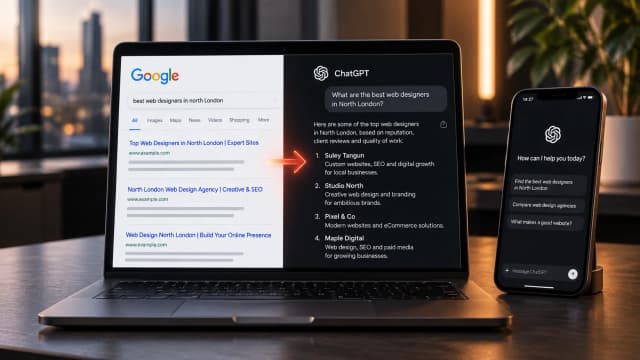
Nobody, including the companies building these tools, can hand you a guaranteed formula for getting mentioned by ChatGPT. What we do have is a reasonably clear picture of the patterns behind who gets cited and who doesn't, based on how these models are actually trained and how they retrieve information at the point someone asks a question.
Structure matters more than ever
AI models parse content, they don't just read it the way a person does. A page with a clear question as a heading, followed by a direct, specific answer in the first sentence or two, is far easier for a model to lift and cite than three paragraphs of scene-setting before you get to the point.
This is exactly why an FAQ section at the bottom of a page, structured with proper markup, tends to perform well for this kind of query, because it's already in the exact question-and-answer shape these tools are looking for.
Being specific beats being comprehensive
A page that says "prices vary depending on your requirements" gives a model nothing concrete to cite. A page that says "most small business websites cost between £800 and £4,000" gives it something to actually work with. Vague, safe language protects you from being wrong, but it also makes you invisible to a tool that's specifically looking for a citable fact.
Structured data is the closest thing to a direct signal
Schema markup (the behind-the-scenes code that tells search engines what a piece of content actually is) has always mattered for traditional SEO, but it's become more directly useful for AI retrieval too. FAQPage, Article and Organization schema all give a model an unambiguous, machine-readable summary of your content, rather than making it guess from raw text.
Being mentioned elsewhere still counts
Large language models (LLMs) are trained on a huge cross-section of the internet, including reviews, directories, forums and other websites that reference yours. A business that's genuinely well-regarded and mentioned consistently across the web, not just on its own site, has a real advantage here that no amount of on-page tweaking alone replaces.
What I'd actually prioritise first
Add clear, specific FAQs to your key pages with proper schema markup
Answer the actual question in the first sentence of every section, not the third
Keep facts (pricing, location, services) current, because an AI model repeating outdated information reflects badly on both of you
This is still a genuinely new area and the goalposts will keep moving. If you'd like your site reviewed with this specifically in mind, it's part of the SEO work I do, so get in touch and I'll take an honest look.
Frequently asked questions
Is this the same as SEO?
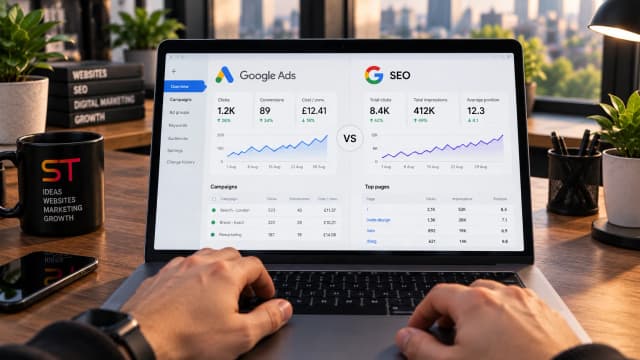
It overlaps heavily but isn't identical. Traditional SEO optimises for ranking algorithms, while this (sometimes called AEO, Answer Engine Optimisation) optimises specifically for being understood and cited by AI models. Good fundamentals help with both.
Can I track whether LLMs (Ai Apps) are mentioning my business?
Yes. While AI search tracking isn’t as established as traditional Google rank tracking, a growing number of tools can monitor how often your business appears in AI-generated results across platforms such as ChatGPT, Google AI Overviews and Perplexity. You can also check referral traffic from AI platforms in your analytics, giving you a better picture of whether your AI visibility is turning into actual website visits.
Does paying for ads help me get mentioned by AI tools?
No, these are separate systems entirely. Being cited by an AI chatbot is currently based on organic content and structured data, not any form of paid placement.
How long does it take to see a difference?
There's no reliable timeline, since it depends on when and how models are updated with newer training data, which isn't public information. Treat it as a long-term investment in clarity and structure rather than something with a fixed payoff date.