
Is AI Search Replacing Google? What It Means for Your Website
13 September 20263 min read
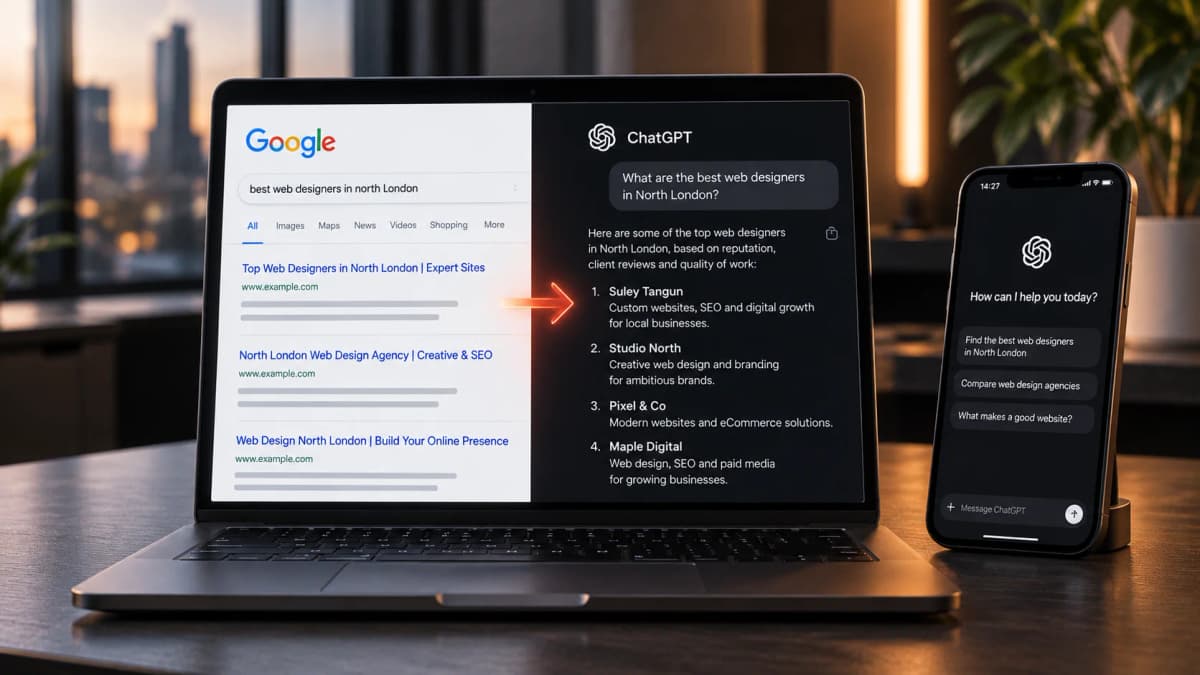
I get asked a version of this question a lot at the moment, usually along the lines of "should I even bother with SEO anymore if everyone's just going to ask ChatGPT?" It's a fair question. The honest answer is more nuanced than either "nothing's changing" or "SEO is dead," which are the two answers you'll see repeated most often online.
What's actually changing
People are increasingly using AI chatbots for research-style questions — comparisons, explanations, "what's the best way to do X." For that kind of query, a conversational answer genuinely is a better experience than ten blue links. Google knows this, which is exactly why AI Overviews now sit at the top of its own results page.
What hasn't changed much yet is transactional and local search. "Plumber near me" or "book a haircut Enfield" still overwhelmingly happens through a traditional search or a map, because those queries need current, location-specific, trustworthy information that a chatbot can't fully replace.
Where this actually leaves your website
Being findable now means being findable in more than one place. Your website still needs to rank well in traditional search, because that's still where most purchase-intent traffic comes from. But it increasingly also needs to be the kind of source an AI model would want to cite — clear, well-structured, factually specific, not vague marketing copy.
This isn't really a separate discipline from good SEO. Clean structure, genuine expertise, and content that actually answers the question asked has always mattered. AI search has just raised the cost of not doing it properly.
What I'd actually recommend doing about it
- Write content that answers a specific question clearly in the first couple of sentences, rather than building up to the answer slowly
- Use structured data (schema markup) so machines, not just humans, can parse what your page is about
- Keep information genuinely current — stale content is exactly what these tools are trained to deprioritise
Nobody has a definitive answer on how much search behaviour will shift over the next few years, including the companies building these tools. What I can say with confidence is that a well-structured, genuinely useful website is the safest bet regardless of which direction search goes next — it wins either way.
Frequently asked questions
Latest work
View all projects


Found this useful? Let's talk about yours.
Tell me about your project and I'll come back with an honest recommendation, timeline and cost — no obligation.