Do You Still Need a Website If Customers Use AI Search?

Suley Tangun
Digital Marketing Specialist
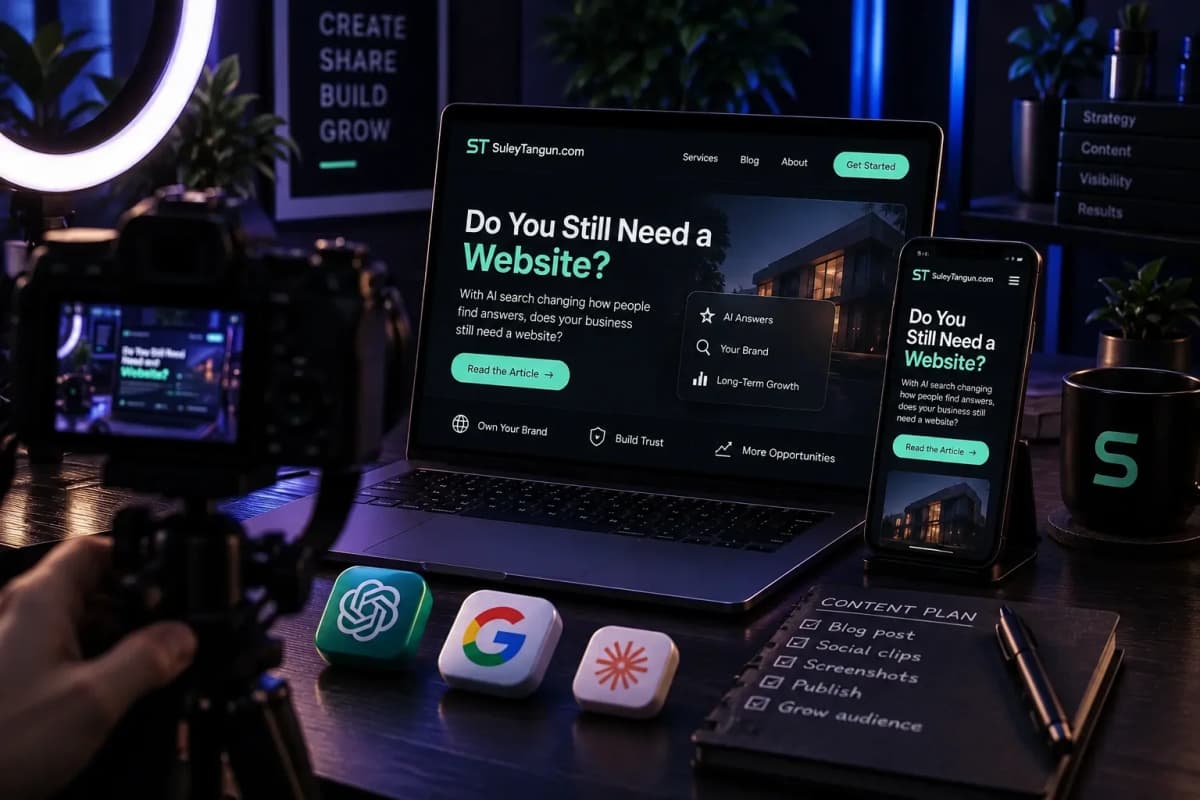
If someone can ask an AI assistant for a recommendation and get a straight answer without ever clicking a link, it's a fair question whether a business still needs its own website at all, or whether it's enough to just exist somewhere these tools can find you. My honest answer is that the website matters more in that world, not less, and the reasons have very little to do with search rankings.
It's the only part of your presence you actually own
Your Google Business Profile, your Instagram account, your listing on a directory or marketplace: all useful, and all run on someone else's rules. An algorithm change can cut your reach overnight, a platform can change what it charges or restrict an account with little explanation, and neither the content nor the audience is really yours to take with you. Your website gives you much more control over what is said, how it looks and what happens next, although you still rely on your domain registrar, hosting provider and any platform services you use.
AI points people somewhere, it doesn't close the deal
Even when an assistant recommends you by name, the person still has to act on it: book a call, check your prices, look at your past work, buy the thing. That step happens on a page, and a chat window isn't built for it. If the recommendation sends someone to a dated, slow or confusing site, you've effectively been recommended and then lost the enquiry anyway. The website is where discovery turns into an actual customer, whichever route they arrived by.
AI tools need a source to quote, and it should be you
When these tools describe your business, they're piecing it together from whatever they can find. If your own site clearly states what you do, where you work, what it costs and how to reach you, that's the most authoritative source available and the one most likely to be treated as the definitive version. Without it, the answer gets assembled from old directory entries, a stray review and whatever a comparison page says about you, which is rarely the version you'd choose.
Discoverability is built on top, not instead
I often hear "being found by AI" and "having a website" talked about as if they're competing priorities, as though money spent on one is money taken from the other. In practice the website is the foundation and the discoverability sits on top of it. Almost everything that makes you easier for AI tools to understand, from clearer service pages to accurate contact details, is something you'd do on your own site first.
What that means in practice
Treat your site as the single source of truth and keep it current, so every other listing can match it
Make the next step obvious on every key page, because someone arriving from an AI recommendation has usually already half decided
Keep your social and directory profiles, but point them back to the site rather than relying on them alone
None of this needs a huge build. Most small business sites I work on land somewhere from £500 to £4,000+ depending on the size, complexity and features required, and a lean, well-structured site you own outright will outlast whichever platform is fashionable this year. If you're wondering whether yours is still pulling its weight, get in touch and I'll give you an honest view.
A quick note: this is my own opinion, based on what I've seen work in practice, not formal legal, financial or professional advice. Your situation may differ, so do your own research before making a decision. These views are mine alone and don't reflect any employer or organisation I'm affiliated with.
Sources
- Google Search Central: AI features and your website
- Google Search Central: Creating helpful, reliable, people-first content
Related reading
Frequently asked questions
Do I still need a website if customers find me through ChatGPT or other AI tools?
Yes. AI tools can point someone towards you, but the booking, enquiry or purchase still has to happen somewhere. Your website is where that step takes place, and it's also the most authoritative source these tools can draw on when they describe your business.
Isn't a Google Business Profile or social media page enough?
They're worth having, but they run on someone else's rules. Reach can drop after an algorithm change and accounts can be restricted with little warning. Your website is the one part of your online presence you own outright, so it should be the hub everything else points back to.
What should my website include so AI tools describe my business accurately?
Clear, current basics stated plainly on the page: what you do, where you work, typical pricing, and how to get in touch. The more clearly your own site states these facts, the less an AI tool has to piece together from old directory listings or third-party pages.
How much does a small business website cost in the UK?
Freelance website builds for small businesses typically range from £500 to £4,000+ depending on the size, complexity and features required, such as the number of pages, any booking or e-commerce features, and how much content needs writing.